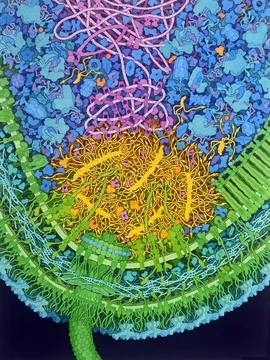
Steroid hormone
Steroid hormones regulate metabolism, immunity, and sexual development.

Steroid hormones are steroids that act as hormones, produced naturally in the body or synthesized artificially. They are classified into corticosteroids (made in the adrenal cortex) and sex steroids (made in the gonads or placenta), with five types based on receptor binding: glucocorticoids, mineralocorticoids, androgens, estrogens, and progestogens. Vitamin D derivatives are a closely related hormone system with homologous receptors. These hormones help control metabolism, inflammation, immune functions, salt and water balance, development of sexual characteristics, and the ability to withstand injury and illness.
- classification
- Corticosteroids and sex steroids
- types
- Glucocorticoids, mineralocorticoids, androgens, estrogens, progestogens
- synthesis
- Generally synthesized from cholesterol in gonads and adrenal glands
- transport
- Bound to carrier proteins such as sex hormone-binding globulin or corticosteroid-binding globulin
- mechanisms
- Genomic and non-genomic pathways
Lore & Background
Steroid hormones are lipids that can pass through cell membranes due to their fat solubility. They bind to steroid hormone receptors, which may be nuclear or cytosolic, to bring about changes within the cell. These hormones are generally carried in the blood bound to specific carrier proteins, and further conversions and catabolism occur in the liver, peripheral tissues, and target tissues. Synthetic steroids have been contrived, some weaker or stronger than natural steroids, including glucocorticoids like prednisone, androgens like nandrolone, and progestins like norethisterone.
Reader's Guide
Steroid hormones are significant for their wide-ranging roles in physiology and medicine. They control critical processes such as metabolism, inflammation, immune function, salt and water balance, and sexual characteristics. The free hormone hypothesis states that only unbound hormones can affect cells, though endocytosis via megalin may also play a role. Their ability to cross membranes easily at physiologic conditions, unlike cholesterol, allows rapid action. Genomic pathways alter transcription slowly, while non-genomic pathways, often mediated by membrane receptors like GPCRs, act quickly. Synthetic steroids and antagonists provide therapeutic options for various conditions.
Did You Know?
- Steroid hormones are generally synthesized from cholesterol in the gonads and adrenal glands.
- Vitamin D derivatives are a sixth closely related hormone system with homologous receptors.
- Some synthetic steroids are weaker or stronger than the natural steroids whose receptors they activate.
- Steroid hormones have been shown experimentally to cross membranes near a rate of 20 μm/s, depending on the hormone.
More in Molecular Biology 1-18
Spotted an error? Know more?
This is a living reference — every entry is fact-audited, and reader corrections feed straight into our audit queue. Suggest an edit · See this site's audit record